

A Comprehensive Guide to Microfiber Car-Cleaning Towels: From Fiber Structure to Paint Protection
I. Why Ordinary Towels Damage Car Paint—and Why Microfiber Doesn’t
Traditional cotton towels typically have fiber diameters ranging from 10 to 20 microns. Under a microscope, using such a towel is akin to dragging thick ropes across your car’s paintwork. When sand or dust particles become trapped between the towel and the paint, these coarse fibers cannot encapsulate the debris; instead, they push the particles across the clear coat, creating the fine, circular scratches known as “swirl marks.”
High-quality microfiber, by contrast, features fibers with diameters of just 0.1 to 0.4 microns—roughly 200 times thinner than a human hair. These are composed of a blend of polyester and polyamide, processed using a “split-fiber” (or “orange-slice”) technique, where a single filament is divided into eight wedge-shaped segments. This structure offers two key advantages: the countless tiny gaps between the fibers trap and lock away dust and oils, preventing them from being dragged across the paint surface; meanwhile, the wedge-shaped cross-sections act like millions of miniature shovels, lifting dirt out of the microscopic pores of the paint finish.
The data is telling: under the same amount of pressure, high-quality microfiber is approximately 40% more efficient at removing particulate contaminants than a pure cotton cloth, while reducing the risk of physical abrasion to the clear coat by over 80%. In short, the money you might “save” by using the wrong towel to clean your car will likely end up costing you several times more in labor fees at a professional detailing shop.
II. Three Key Parameters to Ensure the Right Purchase
Microfiber towels on the market vary significantly in price—from just a few dollars to over a hundred. This price gap isn’t merely a matter of brand premium; it comes down to three specific technical indicators.
The first metric to check is GSM (grams per square meter). This figure indicates the weight of the fabric per square meter and directly determines the towel’s thickness and water-absorption capacity. Towels with a density of 300–400 GSM are ideal for interior cleaning and glass wiping; they are lightweight and easy to handle. The 400–600 GSM range is the “sweet spot” for drying paintwork—offering sufficient absorbency without becoming overly heavy or cumbersome. Towels with a density of 800 GSM or higher—typically featuring twisted-loop or long-pile fibers—are designed for large-area drying, capable of removing water droplets from an entire vehicle in a single pass. However, a higher GSM is not always better; excessively heavy towels are difficult to wring out and become unwieldy when wet, which increases the risk of dragging trapped grit or sand particles across the surface during use.
The gold standard for fiber composition is a blend of 80% polyester and 20% polyamide (nylon). Polyester provides structural strength and channels for water absorption, while polyamide enhances absorbency and softness. Products that deviate from this ratio—or those made using recycled materials—often feel stiff and are significantly more prone to shedding fibers.
Edge finishing is a crucial safety detail that is frequently overlooked. Inexpensive towels often feature heat-cut or basic stitched edges; these are hard and abrasive, effectively acting like a plastic scraper when dragged across a vehicle’s paintwork. Professional-grade towels, by contrast, utilize laser-cut, edgeless designs or ultrasonic cutting, ensuring there are no rigid seams anywhere on the towel. If you frequently work on dark-colored paint or piano-black interior trim, this factor is even more important than the GSM.
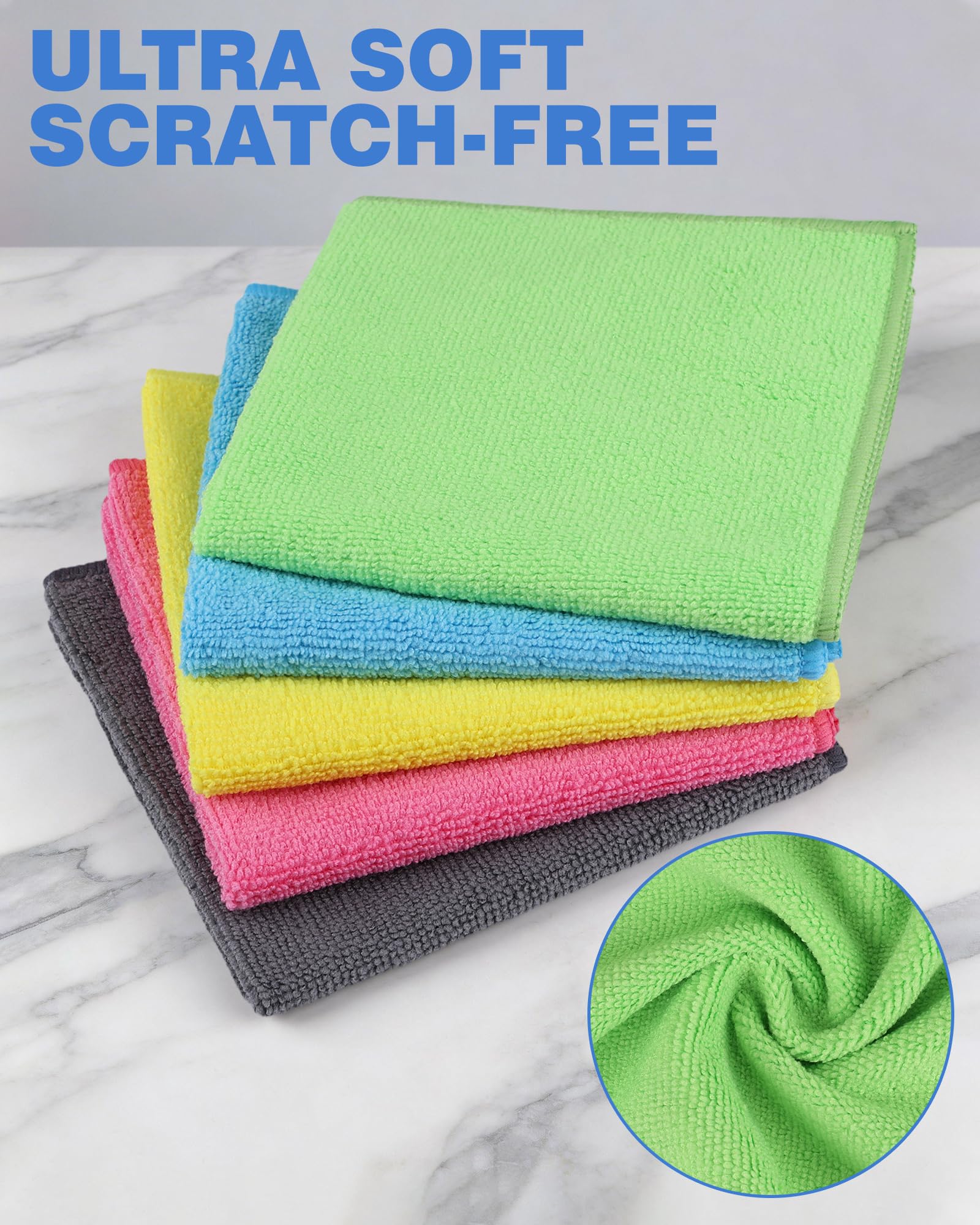
III. Using the Right Towel for the Right Task
Using a single towel for the entire vehicle is another common mistake. Different surfaces—such as paint, glass, wheels, and interior trim—have distinct requirements; using the same towel for all of them is not only inefficient but also leads to cross-contamination.
For drying paintwork, you need a large, highly absorbent towel. A twisted-loop towel measuring 60×90 cm (or larger) with a density of 600–1200 GSM is recommended. Twisted-pile fibers are arranged in a spiral pattern, allowing for exceptionally rapid water absorption. When using the “drag” technique—laying the towel flat across a wet surface (such as a hood or roof) and gently pulling it by two corners—the towel’s own weight handles the water absorption, requiring no downward pressure. This method minimizes friction between the towel and the paintwork.
Cleaning glass requires a short-pile, high-density woven towel. Long-pile towels tend to leave behind lint, whereas a short-pile, flat-weave towel—paired with a glass cleaner—can achieve a streak-free finish in a single pass. It is recommended to keep a dedicated 40×40cm short-pile towel exclusively for glass; do not use it on painted surfaces, as any wax or oily residue trapped in the fibers could cause smearing or hazing on the glass.
Interior surfaces and screens require the utmost care. Dashboards, center console displays, and piano-black trim are highly susceptible to scratching. Opt for a 300–400 GSM, short-pile, edgeless towel—use it dry for dusting or slightly damp for removing fingerprints. Never use a towel that has already been used for drying the car’s exterior to wipe screens; any grit or debris trapped in the fibers could cause permanent, fine scratches.
IV. Proper Cleaning Extends Towel Lifespan and Ensures Safety
There is one golden rule for cleaning microfiber towels: never use fabric softener. Fabric softeners work by coating fibers in a waxy, fatty film, which clogs the microscopic pores of the microfiber and instantly destroys its ability to absorb water—a form of damage that is irreversible. Similarly, avoid using bleach or high-heat tumble drying, as both can compromise the molecular structure of the polyamide fibers.
The correct cleaning procedure is as follows: after each use, wash the towels—either by hand or on a gentle machine cycle—using warm water (no hotter than 40°C) and a small amount of neutral detergent (a standard laundry detergent without added fabric softeners is fine). Ensure that no items with zippers, hooks, or other hard fasteners are washed alongside the towels; ideally, wash your car-care towels separately. After washing, allow the towels to air-dry naturally; avoid exposing them to direct, intense sunlight. If a towel has accumulated a significant amount of wax or sealant residue, adding a teaspoon of baking soda during the wash can help break it down.
A well-maintained microfiber towel can last three to five times longer than an ordinary towel. Even so, once a towel becomes noticeably stiff, begins shedding fibers excessively, or starts fraying at the edges, it is time to retire it—continuing to use such a towel will only end up costing you far more in professional paint correction (polishing) services than you might have saved by keeping it in use.
V. A Brief Summary
The core value of a microfiber car-drying towel lies not merely in its ability to remove water, but in doing so without creating new scratches. By choosing the right material blend and fabric weight, using specific towels for specific areas of the vehicle, and avoiding the use of fabric softeners, you will notice a visible slowdown in the development of “swirl marks” (holograms) on your car’s paintwork. Compared to the high cost of professional paint correction, investing in the right microfiber towels—at the cost of only a few dollars apiece—is the most cost-effective choice you can make for your vehicle’s aesthetic maintenance.
Post time: Oct-29-2026