

Stop using old towels to dry your car; a coral fleece towel can save you a fortune on polishing.
When washing your car on the weekend, the most dreaded part isn’t the soaping or rinsing—it’s the drying step. An inadequate towel leaves water spots on the bodywork and a foggy film on the glass; look closely in the sunlight, and you might even spot fine scratches.
The problem usually isn’t that the car’s paint is overly delicate, but that you’ve chosen the wrong tool. Ordinary cotton towels have coarse fibers and absorb water slowly; using them is like dragging dust particles repeatedly across the paint—essentially lightly sanding the clear coat. While the damage might not be visible immediately, over time, the paint loses its luster and “swirl marks” become increasingly dense.
Coral fleece drying towels solve this very problem.
Why it won’t damage the paint
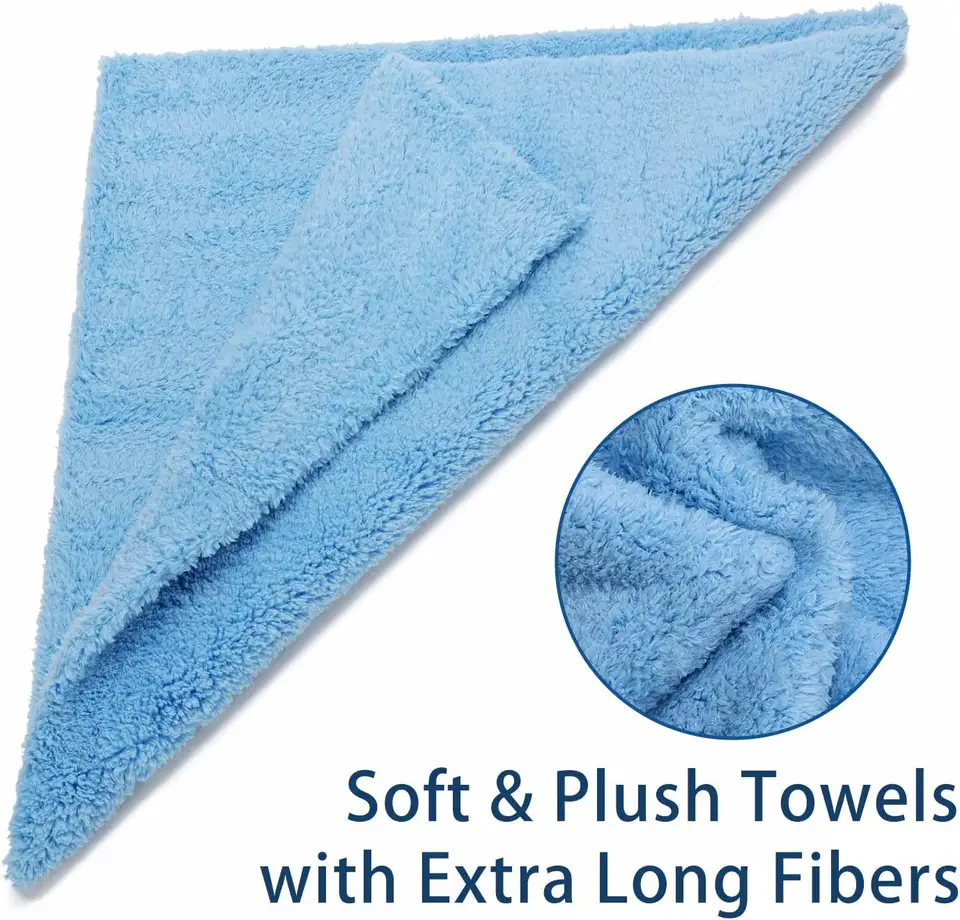
The core advantage of coral fleece lies in its ultra-fine fibers. The diameter of a single fiber is incredibly small—far thinner than a human hair—creating a plush, soft texture that feels like a cloud. The direct benefit of this fineness is that, while drying, the fibers encapsulate dust and grit, trapping them within the pile rather than pushing them across the paint surface.
Another key factor is that it doesn’t shed lint. Inferior towels leave behind tiny fibers that get stuck in door gaps and weather stripping, making cleanup a hassle. High-quality coral fleece towels are densely woven so the fibers don’t easily come loose; even after repeated machine washings, they remain clean and intact.
The difference in water absorption is greater than you’d imagine
When drying a car, nothing is worse than a towel becoming saturated after just a few swipes, forcing you to wring it out repeatedly. The 3D structure of coral fleece allows it to absorb water far exceeding its own weight. In tests, a large coral fleece towel could absorb hundreds of milliliters of water—easily handling the entire roof and hood with capacity to spare.
Even better, it leaves no water spots behind. When using an ordinary towel to wipe glass, a hazy water residue often remains after drying—something that becomes glaringly obvious when hit by oncoming headlights at night. Coral fleece, however, absorbs thoroughly and wipes evenly, resulting in much clearer glass and a paint finish free from unsightly white streaks or smudges.
**Where can a good towel be used?**
Many people assume car towels are only for the bodywork, but their utility goes far beyond that.
Drying the car body is the most basic use case. After washing, a quick pass over large areas instantly removes water droplets. Dual-colored designs offer added practicality: the dark side has high absorbency, making it ideal for the initial wipe-down, while the finer light-colored side is perfect for finishing touches on chrome trim and side mirrors without leaving lint behind.
Glass cleaning is a hidden strength. If the inside of the windshield fogs up or gets smudged with fingerprints, a quick dry wipe with a coral fleece towel restores clarity just as well as a professional glass cloth. Models featuring a combination of suede and coral fleece are particularly effective; the suede side works wonders on glass, cleanly wiping away condensation.
It is equally useful for interior detailing. A gentle swipe with a dry towel easily removes surface dust from the dashboard, center console screen, and door panels—unlike wet rags, it won’t leave water spots. It can also gently pick up loose hair and fine dust from leather seats.
**Use it correctly, and it will last a long time**
Don’t rush to use a newly purchased coral fleece towel on your car immediately. Small amounts of loose fibers may remain from the manufacturing process; simply rinse it with water or give it a good shake first to prevent linting during use.
Cleaning is simple: just rub it with water or a neutral detergent. The key is to avoid fabric softeners, which clog the fibers’ micropores and significantly reduce absorbency. Also, steer clear of bleach, as it damages the fiber structure.
Air-dry naturally in the shade; avoid direct sunlight or high-heat drying to ensure the pile remains fluffy and soft over time. A high-quality coral fleece towel will retain its original texture and absorbency even after repeated washings. Is it worth buying?
Car-drying towels on the market range in price from just a few yuan to several dozen, with the key differences lying in fiber density and weight (GSM). Towels that are too thin become saturated after just a couple of swipes, while ultra-cheap ones tend to stiffen and harden after only a few uses. Although the price range for coral fleece towels is broad, a high-quality, thick towel with neat edging offers far better value for money than constantly replacing cheap alternatives.
Compared to the cost of a full-vehicle polish—which runs into the hundreds—the price of a good towel is negligible. What it protects is the clear coat, the most valuable layer of your car’s paintwork. Whether your car body boasts that “showroom-fresh” shine under the sunlight depends largely on the cloth you use.
Post time: Oct-09-2026