

The Secret Weapon for Restoring Your Car’s Shine: A Comprehensive Guide to Buying and Using Car Towels in 2026
In the realm of daily car maintenance, many owners tend to focus their attention—and budget—on expensive waxes, sophisticated cleaning agents, or high-tech ceramic coatings, while overlooking a fundamental yet critically important tool: the car towel. A low-quality towel not only fails to restore your vehicle’s showroom shine but can actually leave behind microscopic scratches (often appearing as “swirl marks”) on the paintwork, or even trap dust particles that act like sandpaper, abrading the paint surface.
With the advancements in car care technology in 2026, the market now offers a vast array of car towel options. This article provides an in-depth analysis of the science behind towel materials, key purchasing criteria, and proper usage techniques, empowering you to effortlessly achieve a mirror-like finish on your beloved vehicle.
I. Why Shouldn’t You Use Ordinary Household Towels to Wipe Your Car?
Many car owners, seeking convenience, simply grab an old bath towel or cotton cloth from home to wipe down their vehicle—a major misconception.
**Fiber Structure Differences:** Household cotton towels feature relatively coarse fibers that easily trap hard impurities on their surface. Professional car towels, conversely, are predominantly made of microfiber—fibers with a diameter of just 1/200th of a human hair (typically under 5 microns). These ultra-fine fibers can penetrate deep into the microscopic pores of the paint surface, *absorbing* dust particles rather than merely pushing them around.
**Linting Issues:** Ordinary towels are prone to shedding lint; after wiping, the car body is often left covered in white fuzz, which not only detracts from the vehicle’s appearance but also requires additional time and effort to clean up. High-quality car towels, thanks to specialized weaving processes, achieve a near “zero-lint” performance.
**Water Absorption and Dust Retention:** The porous structure of microfiber towels allows them to absorb up to seven times their own weight in water and dust. Furthermore, they effectively lock dirt particles deep within the fibers, preventing them from causing secondary scratches during the wiping process.
II. Core Material Analysis: How to Choose the Right Towel for You?
Currently, the mainstream car towels available on the market fall into several key categories, each offering distinct advantages and disadvantages depending on the specific application:
1. **Microfiber Towels — The All-Around Champion**
This is currently the most highly recommended type of car towel and holds the largest share of the market. Features: Soft, highly absorbent, lint-free, and safe for paintwork.
Applicable Scenarios: Comprehensive vehicle cleaning, including paintwork, glass, and interior surfaces.
Specific Types:
Waffle Weave: Features a grid-like surface texture with minimal contact area, allowing for extremely rapid water absorption. Ideal for drying the vehicle body after washing, as it minimizes water spots.
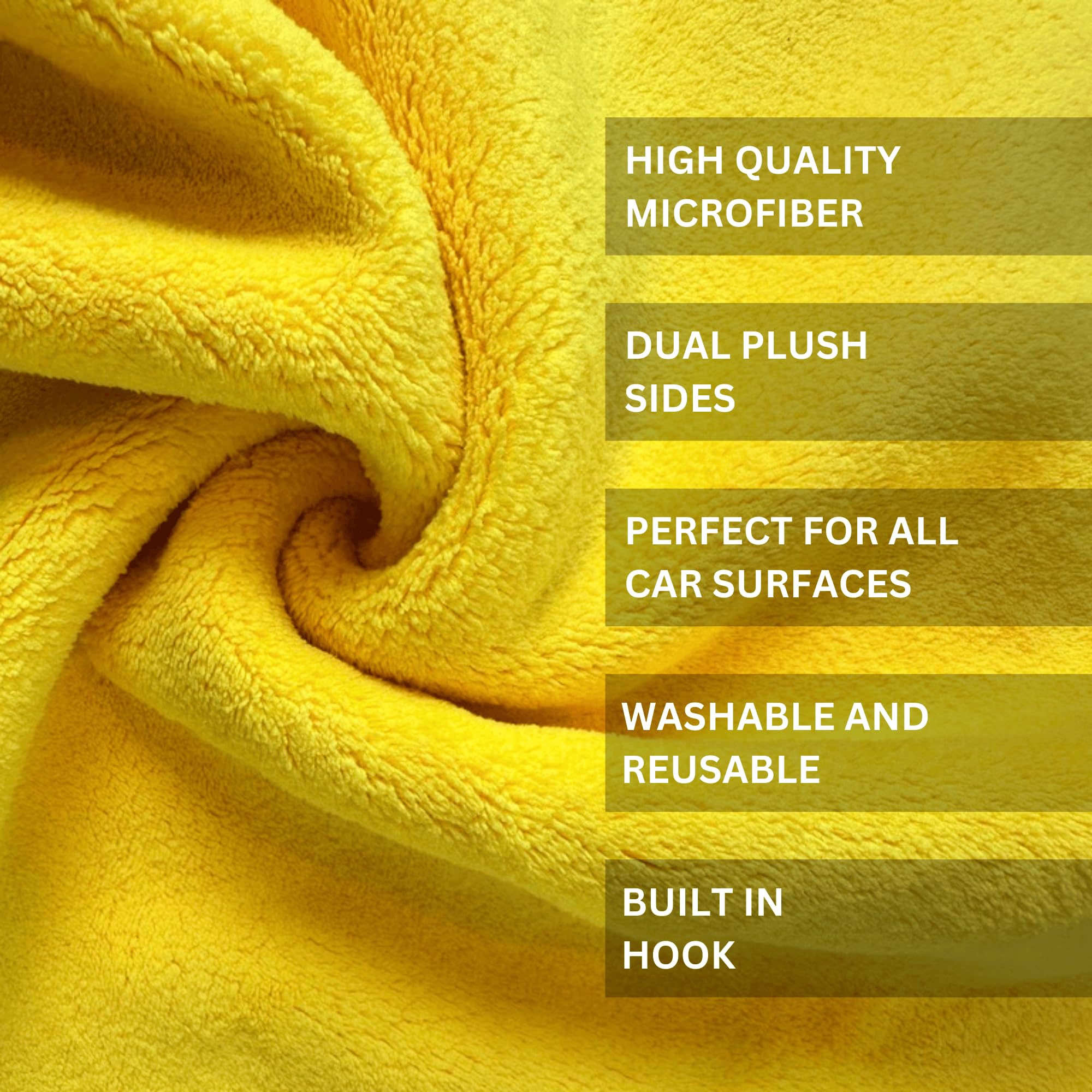
Coral Fleece / Long-Pile: Features long, dense fibers that offer excellent surface coverage. Suitable for waxing, polishing, or tackling heavy stains, as the deep pile can hold a greater volume of cleaning agents and dirt.
Flat-Weave Towels: Feature a smooth, flat surface. Commonly used for the wax removal process; they offer a delicate feel but are slightly less absorbent than the two types mentioned above.
III. 2026 Buying Guide: Key Metrics to Look For
Based on the latest market reviews and user feedback, consider the following parameters when making your purchase:
Weight (GSM):
Represents the weight in grams per square meter. A higher value indicates a thicker, denser towel with superior absorbency and dirt-holding capacity.
Recommendation: For routine wiping, choose 300–400 GSM. For deep cleaning or waxing, a thicker towel of 600 GSM or higher is recommended.
Fiber Fineness:
Look for the “Microfiber” label; high-quality products should feature individual fiber strands with a diameter of less than 5 microns.
Edging/Binding:
Check whether the towel edges are laser-cut or finished with a silk binding. Coarse or rough stitching on the edges can scratch the paintwork when wiping around sharp corners or contours.
IV. Proper Usage and Care: Extending the Life of Your Towels
Owning a high-quality towel is just the first step; proper usage and cleaning are essential to maximize its effectiveness and longevity.
Proper Usage:
Color-Coding: It is recommended to have at least three towels, using different colors to distinguish their specific purposes. For example: blue for paintwork, yellow for glass, and green for interiors or wheels. Never mix uses, as brake dust from the wheels could scratch the paintwork if the same towel is used on both surfaces.
The Folding Method: Fold the towel in half, and then in half again, to create eight distinct cleaning surfaces. Flip the towel to a fresh side after wiping each section to ensure that only a clean surface ever comes into contact with the vehicle’s paintwork. As soon as all eight sides of the towel become soiled, replace it immediately with a fresh one.
Pre-rinse: Before wiping, be sure to use a high-pressure water sprayer to rinse away large particles of dirt and grit from the vehicle’s surface; this prevents scratches caused by “dry wiping” or “semi-dry wiping.”
Washing Guidelines & Precautions:
Fabric Softeners Strictly Prohibited: Fabric softeners clog the microscopic pores within the microfiber structure, causing the towel to lose its ability to trap dust and absorb water.
Wash Separately: Do not wash together with cotton items, as cotton lint may adhere to the microfiber towel.
Low-Heat Drying: We recommend hand-washing or machine-washing (on a gentle cycle) using a pH-neutral detergent, followed by natural air-drying in a cool, shaded area. High-temperature drying may damage the fiber structure.
V. Conclusion
In the intricate details of car care, the humble towel—though small—plays a pivotal role in maintaining your beloved vehicle’s “appearance.” A high-quality microfiber towel, combined with proper wiping techniques, not only saves you the cost of frequent professional polishing but also ensures your car retains a showroom-like luster year-round.
The next time you wash your car, take a moment to check if your current towel is due for retirement. Investing in a few professional-grade car towels is one of the most thoughtful and cost-effective ways to pamper your vehicle.
Post time: Mar-19-2026