

Choosing the wrong drying towel can damage your car’s paint! How do you decide between “standard-density” and “high-density” coral fleece towels?
Many car enthusiasts opt for coral fleece towels when washing their vehicles because the material is soft, absorbent, and gentle on the paint. However, when browsing online stores, the terms “standard-density” and “high-density” can be confusing.
Why is there a twofold price difference between two coral fleece towels? What is the actual difference in performance when using them on your car? Let’s clear this up once and for all.
I. The Core Difference: GSM (Grams per Square Meter) is Key
“Standard-density” and “high-density” essentially refer to the towel’s fiber weight per unit area, measured in GSM. You can think of this as the “material density”:
Standard-density towels: GSM is usually below 600. The fiber arrangement is relatively sparse, and the fabric is thinner.
High-density towels: GSM is usually above 600; premium versions can reach 800–900 GSM. The fibers are tightly packed and thick, resulting in a denser pile.
Simply put: High-density = thicker, heavier, and more material used.
II. Which one suits your car? A buying guide
Once you understand the differences, making a choice becomes easy. You can select the right towel based on your specific needs:
When to choose “High-Density”:
Owners of dark-colored cars (black, dark blue, dark gray). Scratches are more visible on dark paint, so the extra cushioning and protection provided by high-density towels are beneficial.
Owners of SUVs or large vehicles. The large surface area requires superior absorbency and efficiency.
Detailing enthusiasts. If you pursue a mirror-like finish and demand a streak-free wiping experience.
For wax removal. The thick, plush surface allows for more even removal of excess carnauba wax or paint sealants.
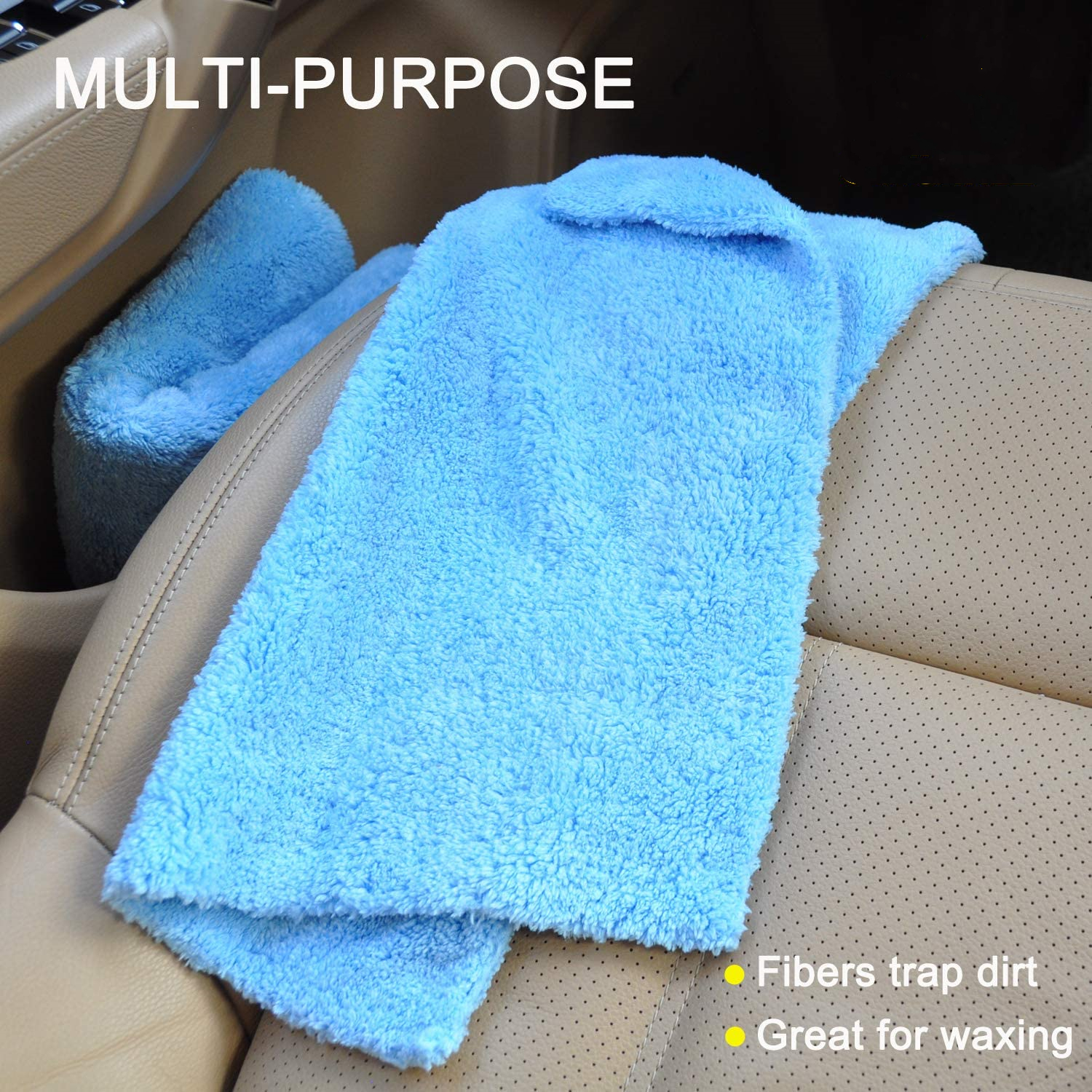
When “Standard-Density” is sufficient:
Light-colored daily drivers. If you aren’t overly concerned about micro-scratches and use the towel mainly for light dusting or wiping interior glass.
Low washing frequency (less than once a month). For occasional use, a standard-density towel gets the job done. 3. Tips to Avoid Pitfalls
Don’t rely solely on the name: Sellers sometimes arbitrarily label products as “high-density.” The most reliable method is to check the product specifications for the weight (GSM) and look for a value of 600 GSM or higher.
Compare the weight: When you receive the items, if you compare towels of the same size (e.g., 40x40cm), the noticeably heavier one is the high-density version.
First-wash advice: Whether standard or high-density, it is recommended to rinse new towels with clean water before the first use. This removes any loose fibers or chemical residues left over from manufacturing, resulting in better absorbency.
Summary
When it comes to coral fleece car-drying towels, “high-density” signifies superior protection and a more efficient user experience. If your car has been with you for years—or if you simply enjoy the process of washing it—spending a little extra on a high-density towel offers a noticeably premium feel every time you wipe down your vehicle, while also providing better long-term care for the paintwork. Standard-density towels, meanwhile, are better suited as backup options for emergency use or light cleaning tasks.
Post time: Jul-07-2026