

Guide to Using Dual-Action Car Towels: One Cloth, Two Functions
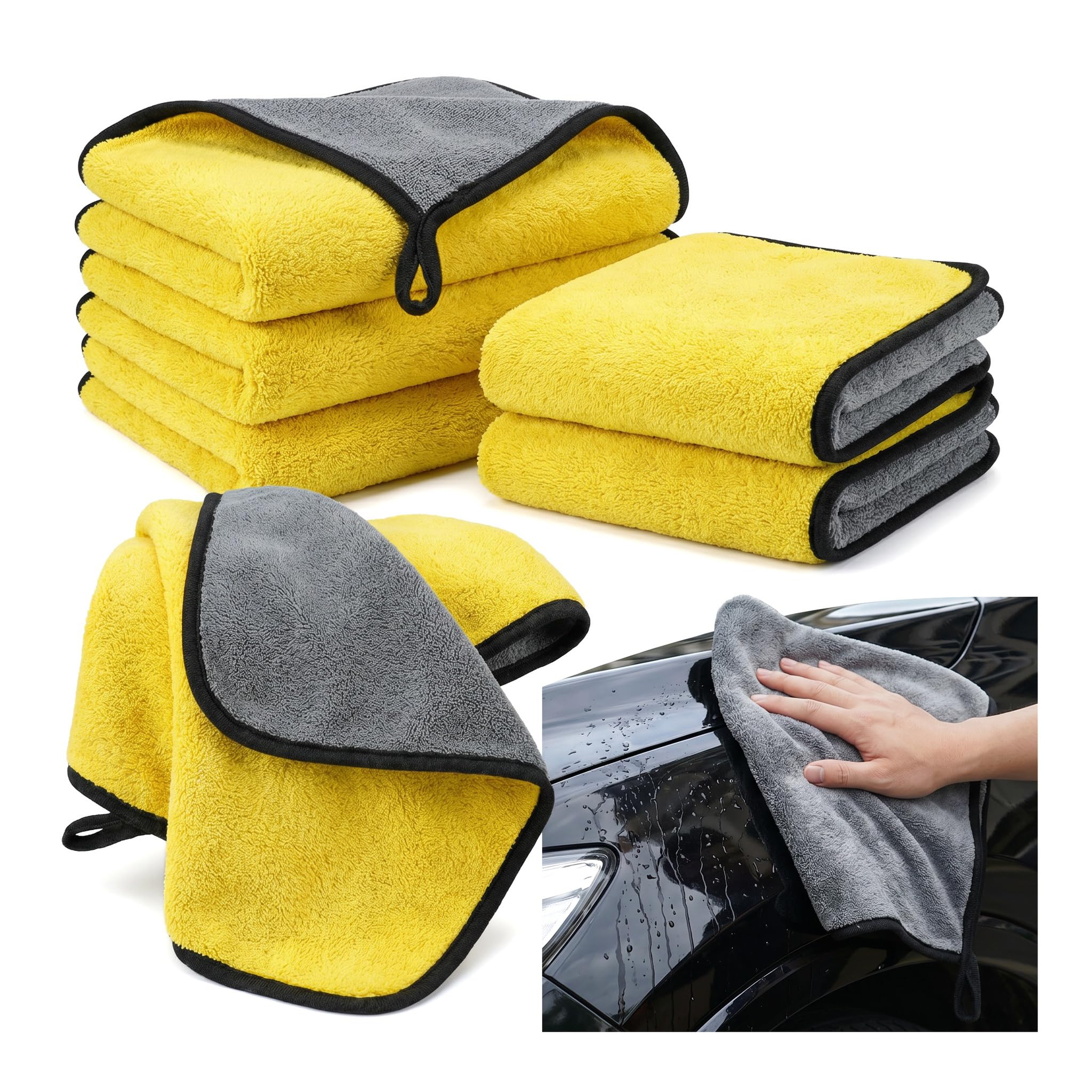
Dual-action car towels have become popular cleaning tools in the automotive detailing world. They typically combine two materials with different functions on opposite sides of the same towel, enabling integrated operations like “cleaning + drying” or “decontamination + polishing,” thereby eliminating the hassle of frequently switching tools.
To get the best results, the key lies in understanding the specific role of each side and using the correct technique.
Getting to Know Your Dual-Action Car Towel
There are two main types of dual-action car towels on the market:
1. Decontamination/Drying Combo
Usually, one side is made of microfiber (for deep cleaning and trapping dirt), while the other is an absorbent plush side (for quickly drying off water). For example, Soft99 products feature a blue side for decontamination and a white side for drying.
2. Clay Bar/Cleaning Combo
One side features a clay bar material (volcanic clay) for removing stubborn stains, iron particles, and oxidation layers from the paint, while the other side is microfiber plush (for drying and polishing after the clay treatment). These towels allow you to tackle stubborn stains immediately after washing, restoring the paint’s smoothness.
Step 1: Pre-treatment—Laying the Foundation
Before using any dual-action car towel, be sure to thoroughly wash the vehicle body. Use a high-pressure washer or a bucket of water to rinse away grit and dust. This is the most critical step for protecting the paint, as residual hard particles can easily cause scratches during wiping.
Step 2: Dual-Side Roles and Proper Technique
Scenario 1: For “Decontamination/Drying” Combo Towels (e.g., Soft99 type)
Blue Side (Decontamination): Thoroughly soak the towel in clean water and gently wipe the vehicle’s surface. This step leverages the properties of microfiber to lift away residual fine dirt without the need for heavy pressure.
White Side (Drying): Wring out the towel and use the white side to absorb water with a straight-line dragging motion. Avoid wiping back and forth, as this can reduce drying efficiency. Wring out the towel promptly when saturated to quickly restore its absorbency. Scenario 2: For “Magic Clay/Cleaning” composite towels (e.g., magic clay cloths)
Magic Clay Side (Decontamination): With the vehicle body wet, saturate the magic clay side of the towel with clean water or car wash solution. Gently glide it over the paint surface; do not apply pressure. A transition in feel from rough to smooth indicates that the oxidation layer and iron particles have been removed.
Microfiber Side (Drying): After treating the entire vehicle, rinse the body with clean water. Then, use the microfiber side to dry the vehicle, wiping in straight lines.
Important Usage Guidelines
Use Gentle Pressure: Avoid vigorous scrubbing during both decontamination and drying. Excessive force can damage the paint or leave swirl marks.
Keep Moist: Frequently rinse the composite towel with clean water during use to keep it wet; avoid dry-wiping the paint surface.
Avoid High Temperatures: Do not use on hot body panels (e.g., after exposure to intense sunlight), and do not expose the towel to temperatures above 40°C for extended periods, as this may damage the material.
Dedicated Use: It is recommended to keep this towel separate from those used for waxing or polishing to avoid cross-contamination and ensure optimal performance.
Care and Storage
After use, thoroughly wash the towel with neutral car wash solution or clean water. Do not use fabric softener, as it creates a film on the fibers that severely impairs future water absorption.
Wring out excess water and air-dry in a cool, well-ventilated area away from direct sunlight to ensure the best performance for the next use.
Post time: Jun-18-2026