

How to Choose a Good Towel?
Step 1: Check the GSM (Thickness)
GSM refers to the weight of the towel per square meter (g/m²). A higher GSM means a thicker, more substantial towel with superior water absorption and better cushioning protection for the paintwork.
For the car body: Choose a thicker towel (300 g/m² or higher).
For the interior: A thinner towel (around 200 g/m²) is sufficient.
It should feel substantial and weighty in your hand; skip any towel that feels flimsy or lightweight.
Step 2: Check the Edging (Hem)
This is the most overlooked “paint-scratching culprit.”
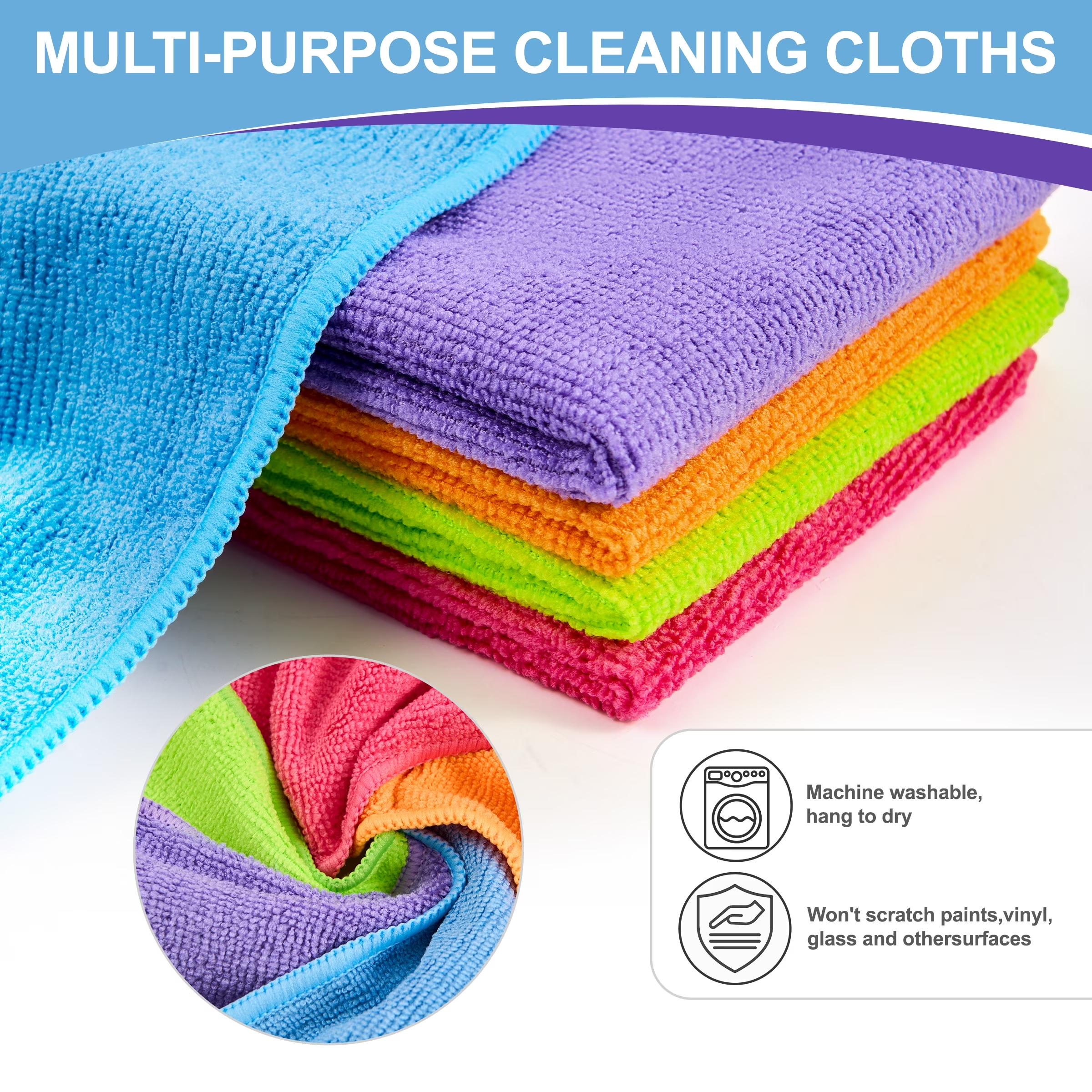
Low-quality towels often have rough edges or are stitched with hard polyester thread. These stiff edges can leave scratches on the car’s paint during wiping. Opt for products with seamless (edgeless) or laser-cut finishes to ensure the edges are soft, smooth, and safe for the paint.
Step 3: Test for Shedding (Linting)
Wet the towel, wring it out firmly, and then pat the surface with your palm—if your hand is covered in fine fibers, discard it immediately. Otherwise, after wiping, you’ll end up with a car covered in a “frosting” of lint.
According to industry standards, the shedding rate for high-quality microfiber towels should be ≤0.3% (referencing the AAA-grade or higher criteria in standard T/FXJXH 001—2025).
Step 4: Test Water Absorption (Rapid Penetration)
Place a drop of water on the towel. A high-quality towel should absorb and disperse the water droplet within 3 seconds, rather than letting it bead up and roll around. If the droplet fails to penetrate quickly, it indicates oily residue on the fibers or poor quality, meaning the absorption performance is substandard.
A key benchmark: High-quality car towels should have an absorption rate of over 1000% (meaning they can absorb more than 10 times their own weight in water).
Post time: Jul-31-2026