

Say Goodbye to Sun Stains, Achieve a Mirror-like Shine: Unveiling the “Towel Matrix” of Professional Car Washes
Many car owners have had this experience: washing their cars themselves, despite putting in tremendous effort and wiping away water stains repeatedly, often results in minor scratches or annoying watermarks, never achieving the flawless shine of a professional car wash.
Is it a lack of diligence? Or is the method wrong? Actually, many times, the problem lies precisely in that seemingly insignificant car towel. Choosing the wrong towel will significantly reduce the effectiveness of even the best car wash detergent and techniques, and may even inadvertently damage your car’s “skin”—the paint.
Why are old household towels a “hidden killer” of car paint?
Many people habitually use old household towels or pure cotton towels to wipe their cars, thinking that simply absorbing the water is enough. But this is actually a huge misconception.
Hardened Material Scratches the Paint: Most household towels are made of pure cotton. During the natural drying process, cotton fibers retain bound water, causing the fibers to cross-link and making the towel increasingly stiff. Using such a stiff towel to wipe a car is akin to sanding the paint with fine sandpaper.
It traps dirt and grime, creating scratches: Cotton towels have poor resilience, and after prolonged use, the fabric loosens and deforms, easily trapping sand and dust. During wiping, these microscopic particles, barely visible to the naked eye, act like micro-sandpaper, leaving fine “sun-like” marks on the clear coat.
Poor absorbency and lint shedding: Ordinary towels are far less absorbent than specialized car towels and easily shed lint, leaving annoying fibers on the car body after wiping, affecting not only appearance but also making cleaning very difficult.
The “secret weapon” of professional car washes: Microfiber
Why can professional car washes leave cars so shiny and scratch-free? A closer look reveals that they don’t rely on just one or two towels; instead, they possess a scientific and efficient “towel matrix.” The core of this system is microfiber.
The microfiber material is extremely soft and delicate, minimizing friction on the paint surface. Its unique segmented technology divides the filaments into eight segments, increasing the fiber surface area and fabric porosity. Utilizing capillary action, it absorbs more than three times the water of ordinary towels, quickly drying moisture without leaving watermarks. Furthermore, the high-strength synthetic filaments are not easily broken, with a near-zero shedding rate, making it ideal for wiping glossy paint and glass surfaces.
Build Your Personalized “Towel Matrix”
To achieve professional-quality results at home, you need to understand and prepare the following types of specialized towels:
1. Exterior Towels (Car Body Wet Removal)
These towels have the largest contact area with the paint surface and require the highest standards.
Preferred: Double-layered woven “braided” microfiber towels. These towels have woven edges, are soft, and extremely absorbent, easily absorbing over 90% of the water from the car body.
Note: While long-pile towels are highly absorbent, they become very heavy after absorbing water, making them inconvenient to handle and difficult to clean, and are not the best choice.
2. Glass Towels
Preferred: Waffle towels. These towels have a unique checkered pattern and their biggest advantage is that they don’t shed lint or fibers. When used with glass cleaner, they instantly absorb water stains on the glass, leaving it clear and streak-free, without any fibers or watermarks.
3. Conditioner Towels (for Polishing/Waxing)
Short-pile towels: Commonly used with quick-drying sprays to enhance shine and add luster.
Coral fleece towels: Thicker and softer, specifically designed for applying high-end car waxes like carnauba wax. They gently and thoroughly remove excess wax, revealing a deep shine.
4. Interior Towels
Cleaning towels: Typically, slightly damp short-pile microfiber towels are used with specialized interior cleaners to effectively remove stains without damaging leather or plastic parts.
Drying towels: We recommend towels with a double-sided design (long and short pile). The long pile side absorbs water quickly after cleaning; the short pile side wipes away any remaining cleaner or conditioner.
Important Principle: Always use the right towel for the right purpose! Towels used for wiping wheel rims and crevices (which easily attract coarser particles) must be kept strictly separate from towels used for wiping large areas of paint to avoid scratching the paint.
How to Choose and Maintain Your “Paint Protection Tool”?
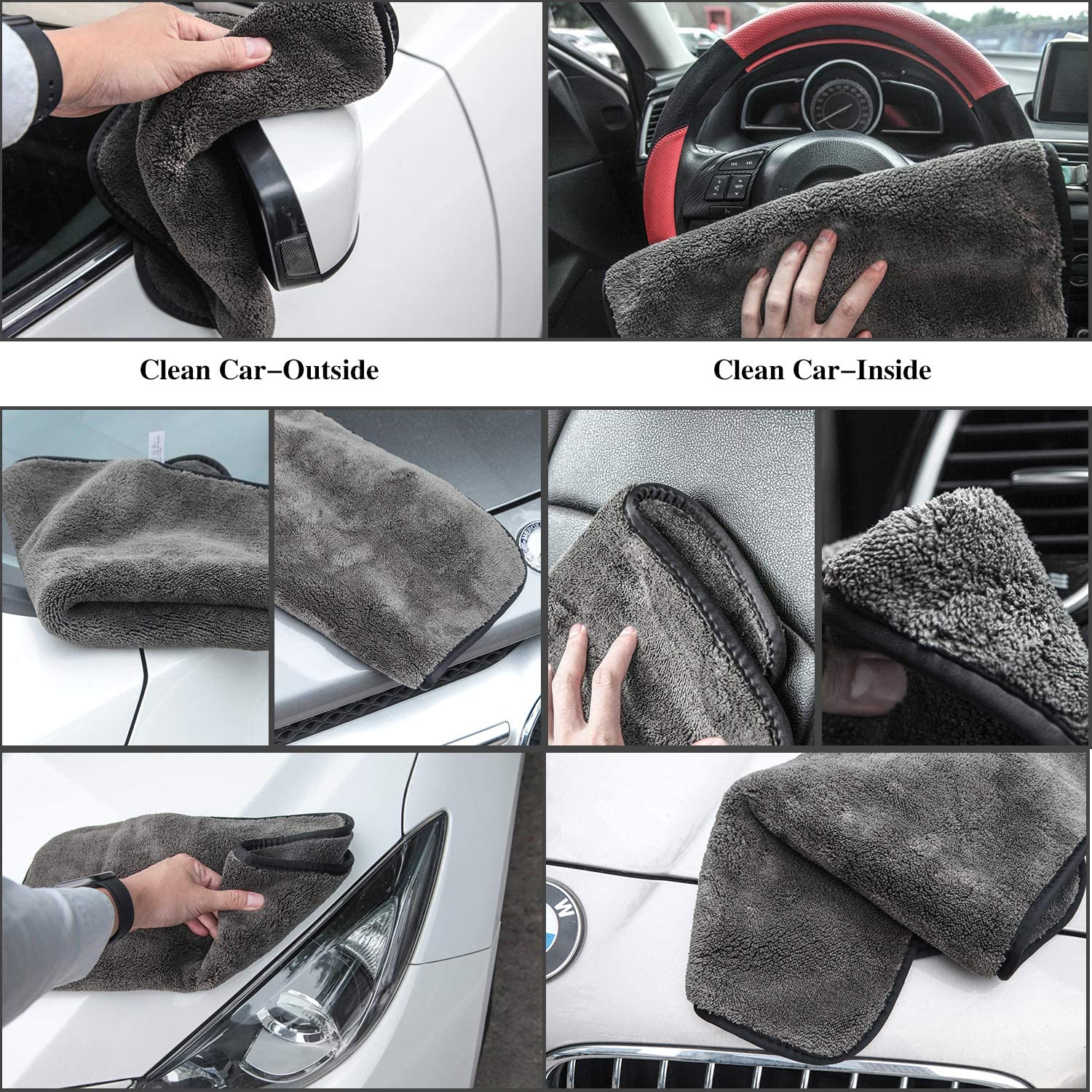
Selection Points:
Material is Key: Look for “microfiber” or “microfiber” towels.
Softness is Crucial: The softer the feel, the better it protects the paint.
Strong Absorbency is Essential: Excellent absorbency reduces the number of times you need to wipe, lowering the risk of friction damage.
Maintenance Method:
Wash Regularly: After each use, hand wash with warm water (approximately 40℃) and a mild detergent to thoroughly remove stains and residue.
Avoid Using Fabric Softener: Fabric softener leaves a film on the fiber surface, severely affecting the towel’s absorbency.
Dry Thoroughly: After washing, allow the towel to air dry completely to prevent bacterial growth in a damp environment.
Give your car the gentlest care, starting with choosing the right towel. When the sunset gilds your car with gold, and your fingertips glide across the mirror-smooth paint, the sense of satisfaction will far exceed your imagination.
Post time: Apr-14-2026