

Warp-Knit Car Drying Towels: Why Are They the “Hidden Standard” in Professional Car Washes?
If you’ve ever glanced at the towel racks in professional car washes or detailing bays, you might have noticed that the towels hanging in the most accessible spots share a few common traits: a distinctively textured, nubby surface; high resistance to stretching horizontally; and edges so smooth they look laser-cut. These are almost certainly warp-knit car drying towels.
Unlike “microfiber”—which is a broad term referring to material composition—warp-knitting describes a specific weaving structure. Although the terms “warp-knit” and “weft-knit” differ by only one character, that distinction dictates completely different behaviors when the towel is used on car paint.
Warp-Knit vs. Weft-Knit: What’s the Difference?
Microfiber towels are categorized by their weaving method: warp-knit or weft-knit. Weft-knitting involves forming loops sequentially across the fabric width using one or more yarns, whereas warp-knitting involves multiple yarns forming loops simultaneously along the length of the fabric.
This structural difference offers a simple, intuitive way to tell them apart: try stretching the towel horizontally with your hands. A weft-knit towel stretches noticeably, while a warp-knit towel barely budges. Warp-knit fabric has low elasticity and excellent dimensional stability; the loops interlock tightly, meaning a single broken yarn won’t cause the fabric to unravel. In contrast, weft-knit fabric is prone to unraveling if a yarn breaks or a hole forms, and the edges are liable to “run” or fray.
For the specific task of drying a car, the warp-knit towel’s resistance to stretching is actually an advantage. It doesn’t deform or slide under pressure, allowing for precise transfer of force to the surface and eliminating the need to constantly readjust your grip while drying. While weft-knit towels feel soft due to their elasticity, they tend to shift or drag along with your hand during vigorous drying, resulting in unnecessary, repetitive friction. Its structure determines how it interacts with the car’s paintwork.
The defining characteristic of a warp-knitted car drying towel is its warp-knitted loop construction: the base fabric consists of chain stitches and weft-insertion structures, while a loop-forming guide bar lays yarn over empty needles; after the loops are cast off, they stand upright and dense. Common product specifications reflect this structural design: a blend of 80% polyester and 20% polyamide (nylon), a weight of approximately 285 g/m², and a loop height of around 2 mm.
This upright loop structure results in several practical performance characteristics:
Reliable water absorption without the “limp, mushy” feel of long-pile towels. The polyamide component provides hydrophilic groups; a higher content generally means better absorption. A 20% polyamide ratio is standard for warp-knitted car towels, allowing them to absorb several times their own weight in water. Because the loops stand upright, moisture is drawn into the micropores between fibers; the towel’s surface does not immediately become slick, allowing for prolonged wiping.
A “firm” feel that may not suit everyone. Warp-knitted towels generally feel stiffer and have more “drag” than weft-knitted ones. This is due to their tight weave and shorter loops. For consumers accustomed to “cloud-like softness,” the initial tactile experience of a warp-knitted towel might not be immediately appealing. However, this very firmness provides clear tactile feedback when wiping glass or paintwork—you can feel the towel gripping and absorbing water rather than simply sliding across the surface.
Outstanding wear resistance and durability. The warp-knit structure prevents loops from easily snagging or pulling out, and the loops resist deformation or stretching under external tension. During car washing, towels often brush against door gaps or emblem edges; while weft-knitted towels might snag or fray in these situations, warp-knitted towels remain largely unaffected.
Three details to check when buying a warp-knitted car towel:
First, ensure the polyamide content is at least 20%. Polyester is hydrophobic, serving to scrape away dirt and provide durability, while polyamide is hydrophilic, handling water absorption. Both components are essential. If a product is labeled simply as “polyester-nylon composite yarn” without specifying the ratio, the nylon content might be as low as 15% or less, significantly compromising water absorption. An 80/20 blend is the benchmark for warp-knitted car drying towels.
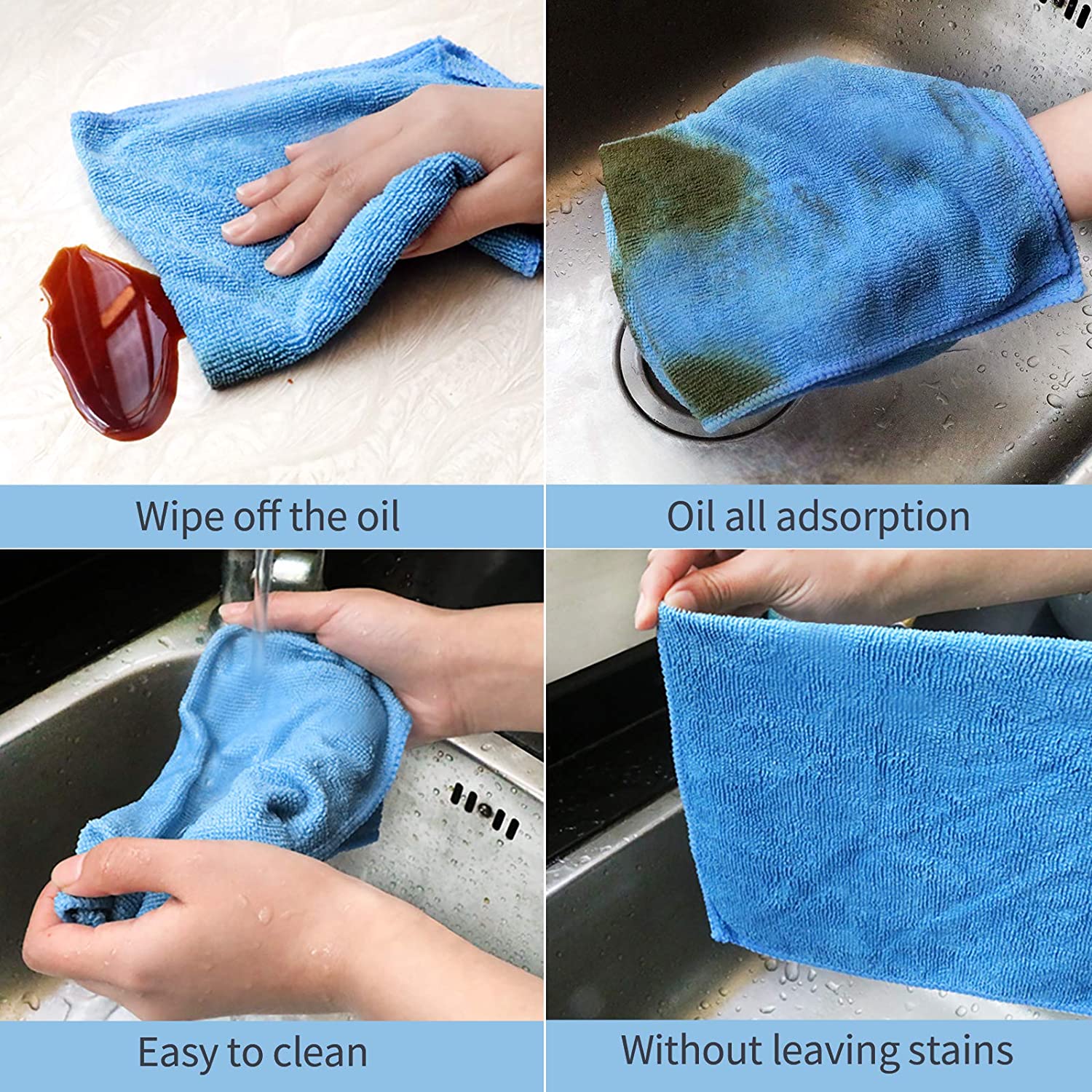
Second, the edge finishing determines whether it is safe to use on the paintwork. While the loops of warp-knitted towels do not easily unravel, untreated cut edges can still leave loose threads. Prioritize products with ultrasonic heat-sealed edges or dense overlocked stitching; smooth, burr-free edges ensure you can glide the towel across the paintwork with confidence.
Third, choose the weight (GSM) based on the intended use. Warp-knitted towels come in a wide range of weights, typically from 190gsm to 400gsm. For drying, a weight of 300gsm or higher is recommended for greater absorbency; a single 40×40cm towel of this weight can generally dry an entire car hood. For interior and detailing work, around 250gsm is sufficient; the thinner, more flexible material makes it easier to reach into door handles and tight crevices.
Technique matters more than the towel itself when using warp-knitted towels.
Warp-knitted towels feature short, upright loops, concentrating their “adsorption” power on the surface. If you continue to wipe vigorously after picking up grit or sand, the gaps between the loops can act like sandpaper, dragging the particles against the paint. Therefore, the usage protocol is the same as for any professional car towel: rinse off mud and sand first, then use the towel to dry the surface.
When drying, lay the towel flat over the surface and apply light pressure to absorb water, rather than wiping in circular motions. Under light pressure, the upright loops maximize contact area, effectively “wicking” away the water film. If you feel increased resistance, it indicates the towel is saturated; flip it over or switch to a fresh one rather than forcing it across the surface.
Avoid fabric softeners when washing; use a neutral detergent and wash by hand in cold water or in a laundry bag in the machine. The warp-knit structure is highly durable, and with proper care, absorbency will not significantly diminish even after dozens of uses. Who is it not for?
The “firm” nature of warp-knitted car towels means they aren’t the top choice for everyone. If you prioritize a soft, plush feel against the paintwork, weft-knitted long-pile towels or coral fleece products would be more appealing. If your primary use involves wiping glass and side mirrors, waffle-weave or suede-style towels offer better control over water streaks.
However, if you value a towel that can withstand repeated, vigorous use—moving from the paintwork to wheels and interior trim, then being washed, dried, and used again—the durability and structural stability of warp-knitted towels make them hard to beat in this price range.
Post time: Sep-29-2026